Specialized Rigging
Request a Job Quote
Submit a Quote Form and a TNT Sales Representative will be in contact with you as soon as possible.
GET A QUOTESpecialized Rigging Services for Complex Heavy-Lift Projects
Not every heavy lift can be completed with a crane alone. Limited headroom, confined work areas, sensitive equipment, and oversized loads often require specialized rigging systems that provide greater control throughout every stage of the move. Selecting the right combination of equipment is just as important as selecting the crane itself, particularly when working inside operating facilities or around existing structures.
At TNT Crane & Rigging, we provide specialized rigging services for industrial, commercial, infrastructure, and energy projects throughout the United States. Our experienced rigging crews develop practical solutions for moving, lifting, positioning, and installing equipment where conventional lifting methods may not be practical. Whether the project involves relocating machinery inside a manufacturing facility, installing transformers at a power plant, or positioning large process vessels at a refinery, we have the equipment and experience to complete the work safely and efficiently.
Working alongside our engineering, crane rental, heavy haul transportation, and machinery moving divisions allows us to coordinate every phase of the project through one experienced team.
Typical Specialized Rigging Applications
Every project presents its own challenges. Some require lifting equipment through low-clearance buildings, while others involve transporting oversized components across industrial facilities before lowering them onto prepared foundations.
Our specialized rigging services are designed to provide controlled movement wherever conventional crane access is limited.
We regularly support projects involving:
- + Manufacturing equipment installations
- + Petrochemical and refinery maintenance
- + Power generation facilities
- + Wind and renewable energy projects
- + Transformer installations
- + Industrial machinery relocations
- + Structural steel assemblies
- + Bridge construction
- + Modular construction projects
- + Data centre infrastructure
- + Mining operations
- + Water and wastewater treatment facilities
Before work begins, we evaluate load dimensions, center of gravity, travel routes, floor capacity, access limitations, overhead restrictions, and final placement requirements to determine the safest and most efficient lifting method.
Specialized Rigging Equipment & Capabilities

Hydraulic Gantry Lift Systems
Hydraulic gantry systems provide an effective alternative when traditional cranes cannot access the work area. With lifting capacities of up to 1,178 tons, our gantries are capable of lifting extremely heavy equipment while operating inside buildings, beneath existing structures, and in areas with limited overhead clearance.
Track systems can also be incorporated to move equipment horizontally after lifting, allowing large components to be relocated with exceptional control.
Cantilever Bars
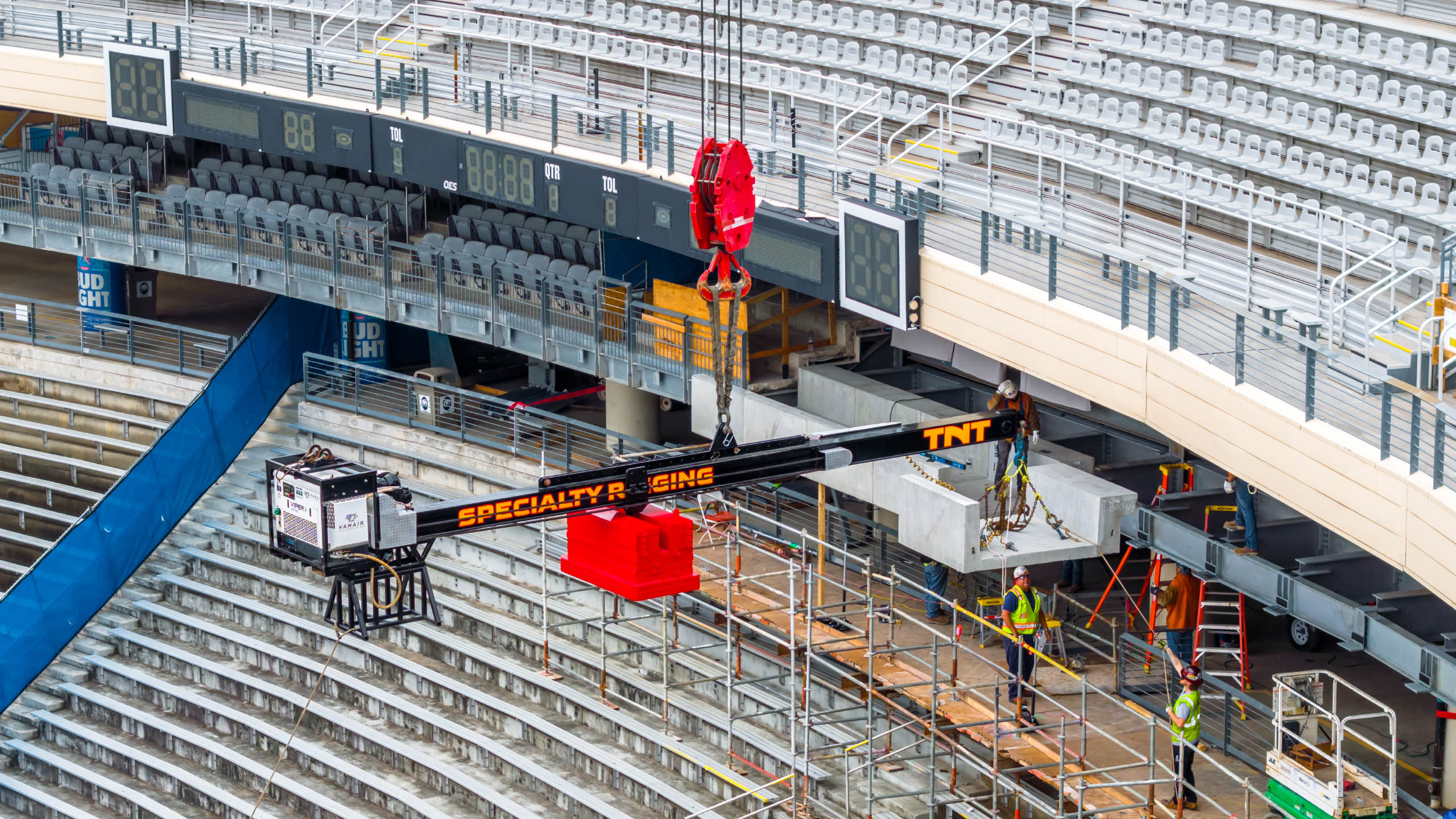
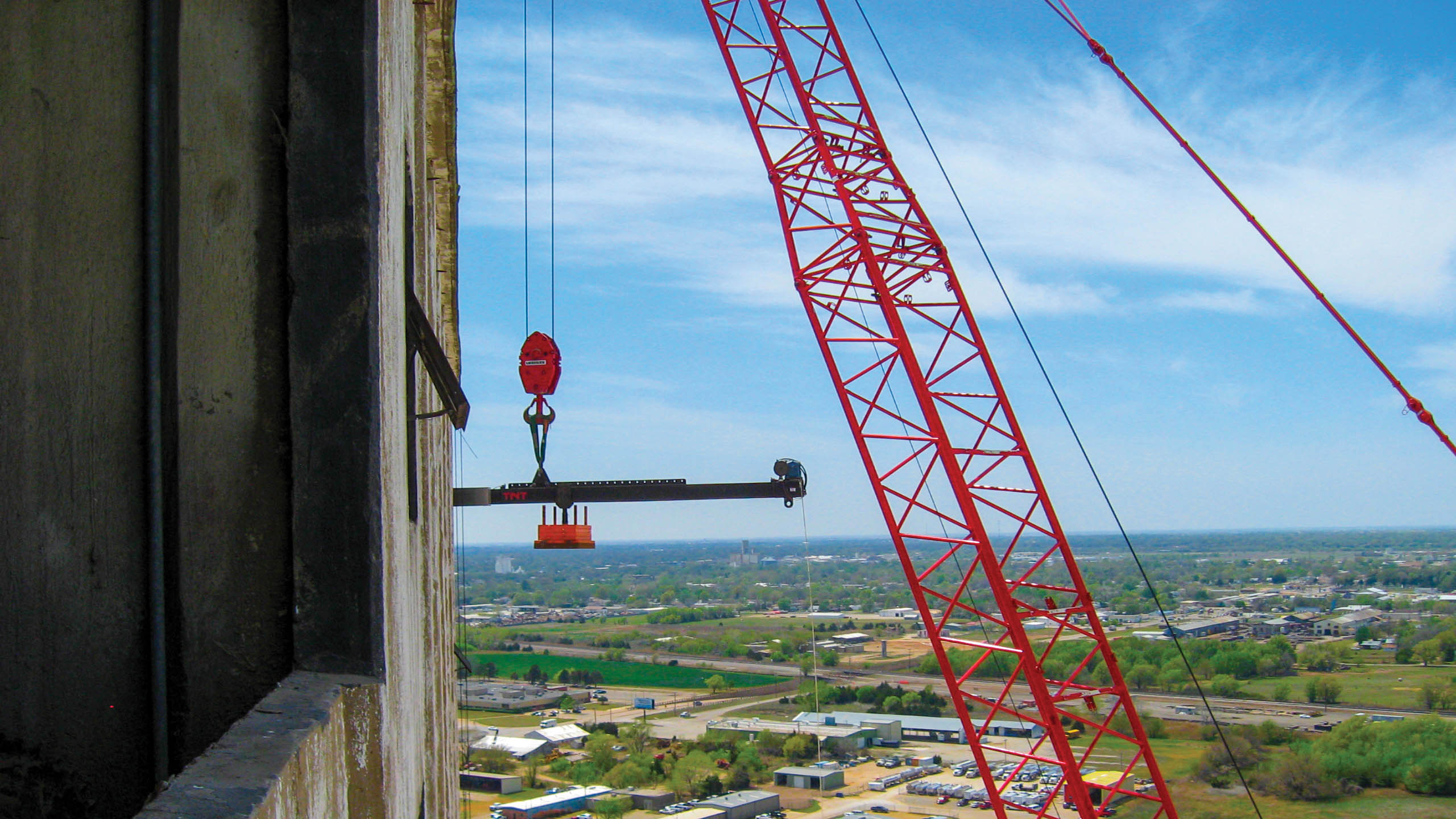
Cantilever bars with rated capacities of 10, 30, and 50 Tons help position loads around structural obstructions or confined work areas where standard rigging configurations cannot provide sufficient reach.
Each application is evaluated individually to ensure the selected rigging arrangement meets the project’s lifting requirements.
Sliding Systems
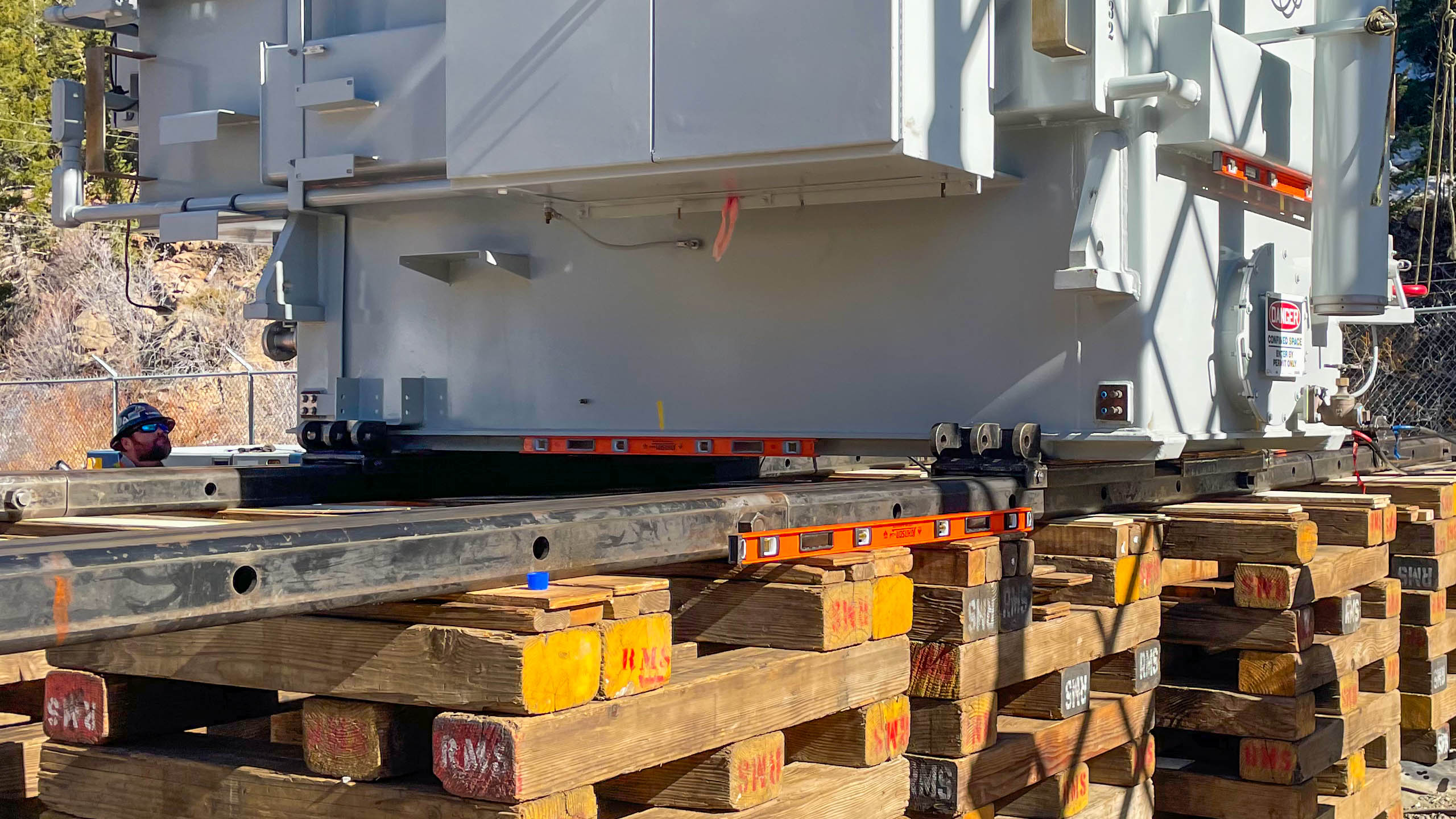
Our sliding systems can move loads weighing up to 500 tons using low-friction tracks designed for controlled horizontal movement. These systems are commonly used to position transformers, turbines, vessels, industrial presses, and other oversized equipment where cranes cannot complete the final placement.
Sliding systems also minimize floor loading while allowing equipment to travel through confined industrial environments.
Hydraulic Jacks
Hydraulic cylinder jacks with capacities of up to 103 tons per jack provide controlled lifting for equipment installation, relocation, leveling, and support.
Depending on project requirements, synchronized jacking systems can raise large loads evenly before transferring them onto sliding systems or machinery skates for final positioning.
Machinery Skates
Our machinery skates are available in rigid and multidirectional configurations with capacities ranging from 6,000 pounds to 100,000 pounds per skate.
These low-profile systems allow heavy equipment to move smoothly across suitable floor surfaces while providing greater maneuverability inside manufacturing facilities, warehouses, and processing plants.

Specialized Rigging Forklifts
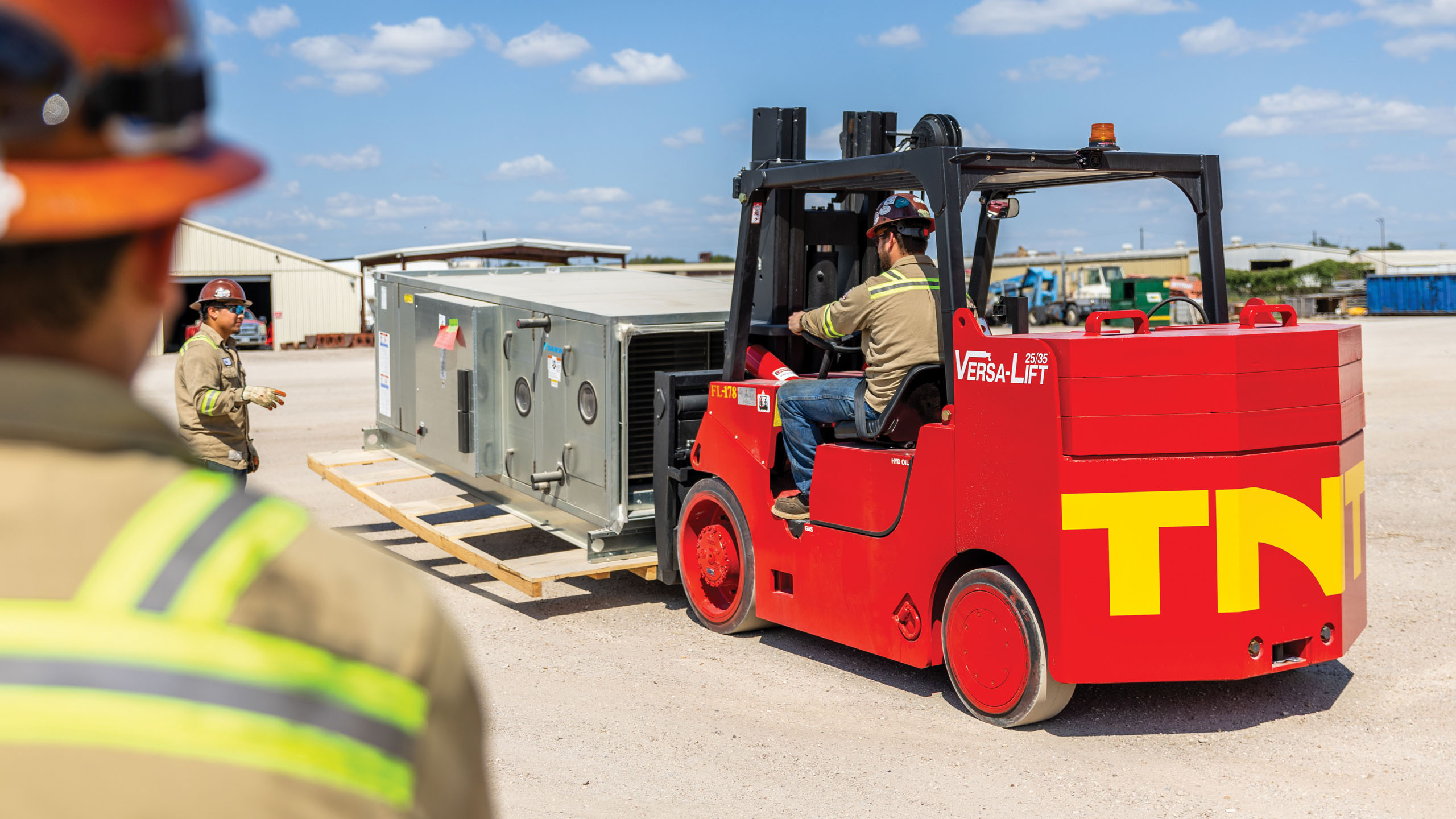
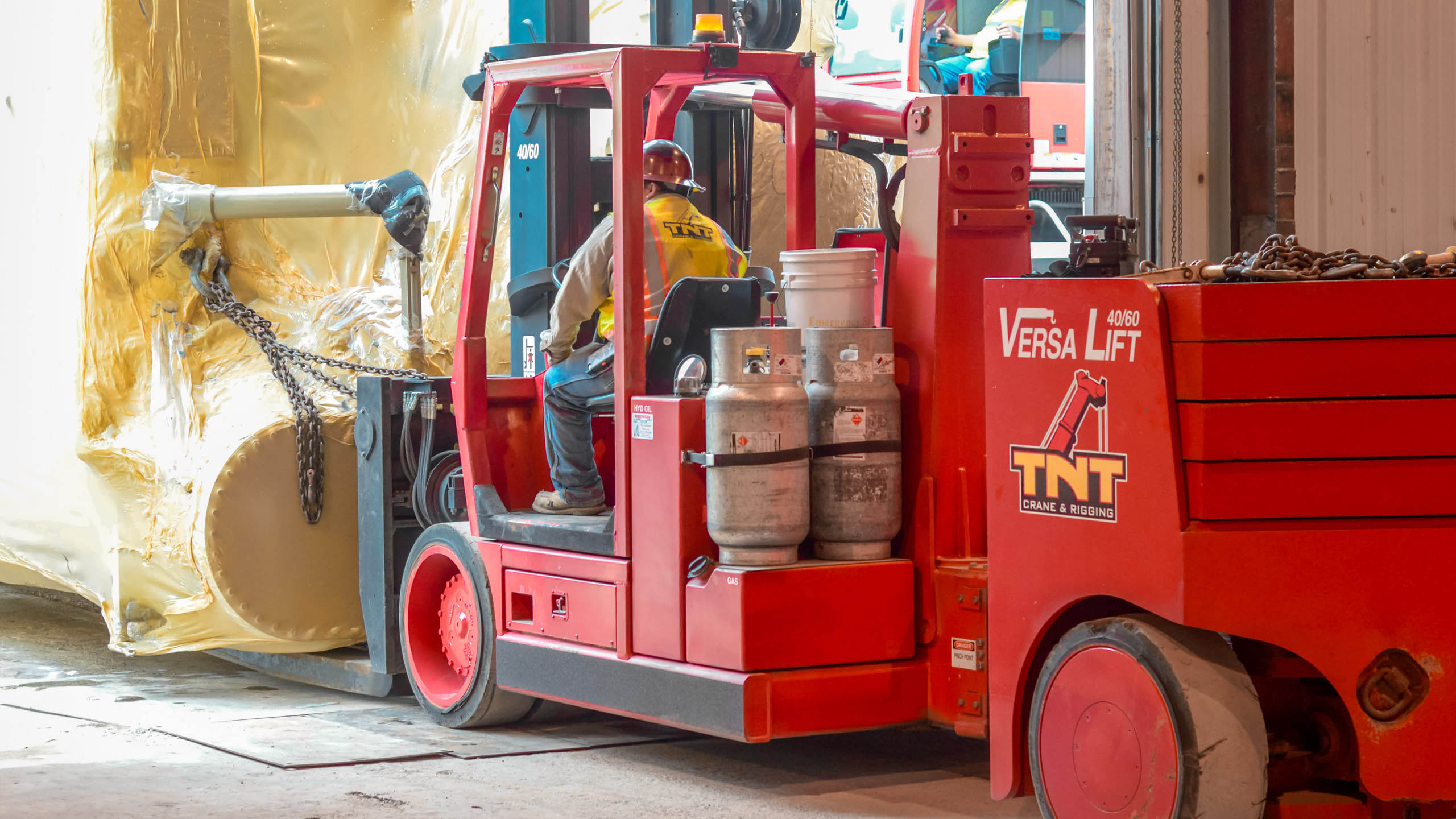
Our fleet includes Versa-Lift forklifts, Hoist forklifts, and TriLifters with lifting capacities of up to 75 tons. These machines combine exceptional lifting capability with excellent maneuverability, making them ideal for machinery installation, industrial maintenance, and equipment relocation projects where larger cranes cannot operate efficiently.

Standard Forklifts
Not all projects require specialized lifting solutions. Our fleet includes standard forklifts and telehandlers from trusted manufacturers like Manitou, Gehl, Lull, Nissan, Toyota, Clark, and Hyster, with lifting capacities ranging from 2,500 pounds to 17,000 pounds. These forklifts provide a cost-effective and reliable solution for a wide range of material handling applications.
Self-Propelled Modular Transporters
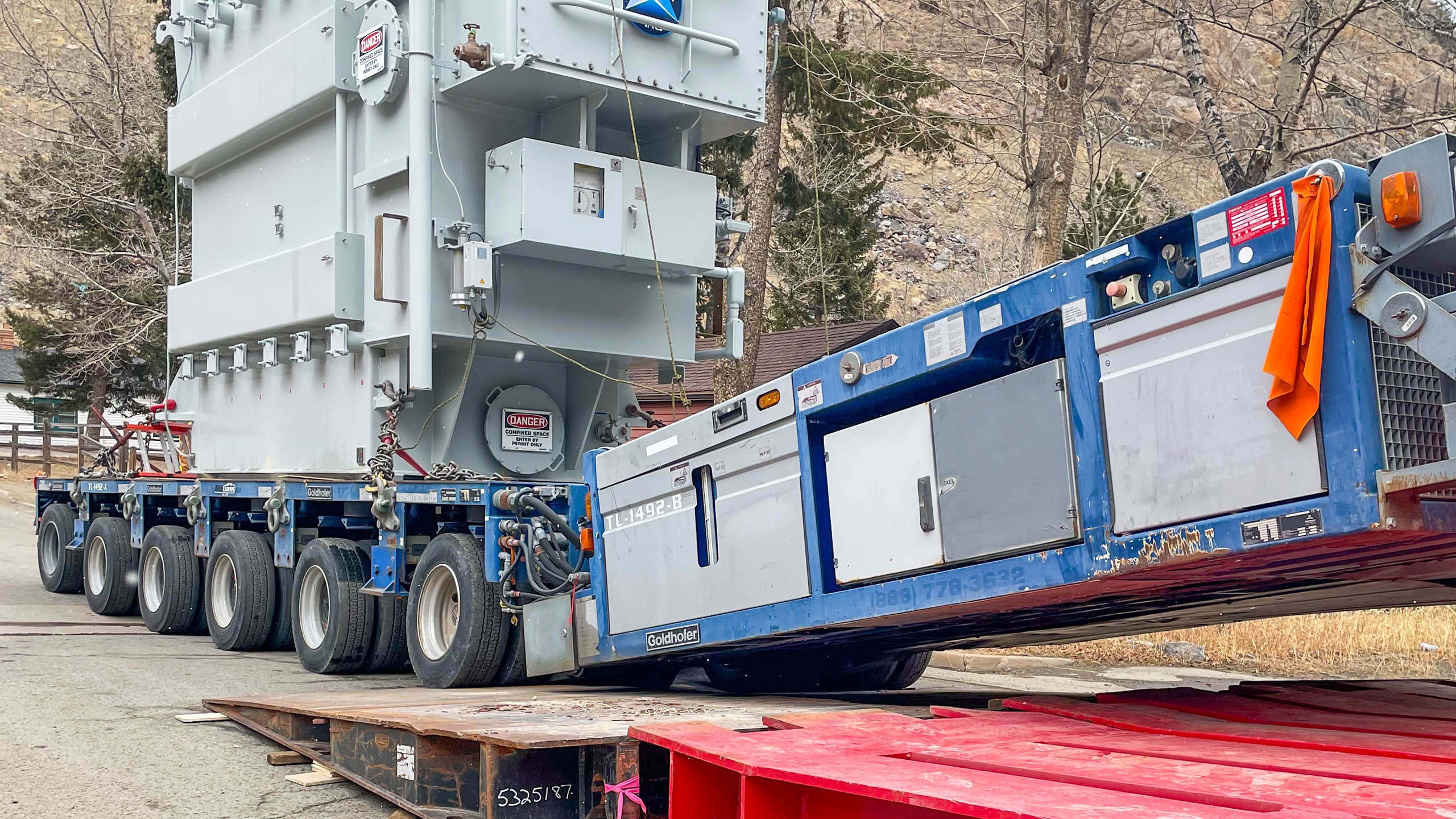
For exceptionally large or unusually shaped loads, our Goldhofer PST/SL-E Self-Propelled Modular Transporters provide precise movement using electronic multi-directional steering and multiple axle configurations.
With capacities of up to 50 tons per axle, SPMTs are commonly used for transporting bridge components, prefabricated modules, heavy process equipment, and other oversized industrial loads.
Equipment Library
Technical Specifications | Crane Capabilities | Load Charts
Why Choose Us for Specialized Rigging?
Complex lifting projects require more than specialized equipment. They require experienced personnel who understand how individual rigging systems work together to safely control heavy loads from pickup through final placement.
Our rigging specialists collaborate closely with engineers, crane operators, project managers, and transportation personnel throughout every phase of the project. This coordinated approach helps reduce unnecessary delays, improve communication between trades, and develop practical lifting solutions that fit the specific conditions of each jobsite.
Because we also provide crane rental, engineering, heavy haul transportation, machinery moving, and industrial storage, customers can rely on a single provider to coordinate multiple services rather than managing several contractors independently.
Our Specialized Rigging Process
Step 1: Project Consultation
We begin by reviewing the load weight, dimensions, lifting requirements, schedule, project drawings, and available site information to understand the scope of work.
Step 2: Site Assessment
When required, our team visits the site to evaluate access routes, floor capacity, overhead clearance, structural obstructions, utility locations, and equipment positioning before selecting the appropriate rigging solution.
Step 3: Rigging Plan Development
Based on the project requirements, we determine the most suitable combination of gantries, forklifts, hydraulic jacks, sliding systems, machinery skates, SPMTs, cranes, and supporting equipment. Engineering drawings and rigging calculations can also be prepared for more complex projects.
Step 4: Mobilization & Execution
Our certified rigging crews deliver, assemble, inspect, and operate the selected equipment while following the approved project plan. Every movement is carefully coordinated to maintain control throughout the lifting operation.
Step 5: Final Placement & Demobilization
Once equipment has reached its final location, it is lowered into position, rigging systems are removed, and the work area is safely demobilized before project completion.
At TNT Crane & Rigging, we are committed to providing safe, efficient, and innovative rigging solutions tailored to your project’s unique needs. Our specialized rigging fleet ensures that even the most complex lifts can be executed with precision, safety, and reliability. Contact us today to learn more about how we can support your next heavy lifting challenge.
Frequently Asked Questions
When should I use specialized rigging?
Specialized rigging is essential when traditional crane access is limited or impractical due to space constraints, low headroom, weight distribution challenges, or confined indoor environments. We typically deploy specialized rigging solutions for heavy equipment installations in manufacturing facilities, machinery relocations within operating plants, component replacements in power generation facilities, and any project where overhead clearance restrictions or floor load limitations prevent conventional crane use.
What is a gantry lift system used for?
Gantry lift systems provide an alternative to traditional cranes for lifting and positioning heavy loads in confined spaces or low-headroom environments where crane access is not feasible. These hydraulic systems consist of multiple independent telescopic towers connected by overhead beams, capable of lifting loads from 15 tons up to over 1,100 tons, and they excel in indoor applications such as transformer installations, press installations, equipment relocations in manufacturing facilities, and bridge construction where precise controlled lifting is required.
How much weight can hydraulic jacking systems handle?
Hydraulic jacking systems can handle capacities ranging from as little as 5 tons for individual toe jacks up to over 1,000 tons for multi-point synchronized jacking systems. A typical four-unit jack-up system configuration provides lifting capacity of approximately 2,000 metric tons (500 tons per unit), and these systems can be configured with multiple jacking points to safely distribute loads and accommodate various weight requirements depending on your specific project needs.
What are machinery skates and when are they needed?
Machinery skates are low-profile wheeled platforms designed to move heavy equipment across floors with minimal friction, available in rigid and swivel configurations with capacities ranging from 6,000 pounds to 100,000 pounds per skate. We deploy machinery skates for relocating manufacturing equipment within facilities, repositioning heavy machinery during plant reorganizations, moving loads in tight spaces where forklifts cannot operate, and any situation requiring smooth horizontal transportation of heavy equipment while protecting floor surfaces from damage.
Can rigging equipment work in confined indoor spaces?
Yes, specialized rigging equipment is specifically designed for confined indoor applications where traditional cranes cannot access or operate safely. Our hydraulic gantry systems, sliding systems, and machinery skates excel in low-headroom environments, tight manufacturing facilities, and buildings with limited overhead clearance, and the modular design of these systems allows us to assemble them in restricted areas and maneuver through doorways and narrow passages that would be impossible for conventional lifting equipment.
How long does it take to mobilize rigging equipment?
Mobilization time varies based on equipment complexity and project scope, but hydraulic gantry systems can typically be transported on standard flatbed trucks and set up in less than two hours once on site. Most specialized rigging equipment features modular designs that minimize assembly time, and the primary time investment involves ground preparation, load calculations, and safety verification rather than equipment setup, allowing us to deploy solutions efficiently while maintaining the highest safety standards.
Do machinery skates damage floors or concrete surfaces?
Properly selected machinery skates protect rather than damage floors when used correctly. We offer various wheel materials including polyurethane-coated rollers specifically designed for delicate surfaces like epoxy-coated or sealed concrete, steel rollers for standard industrial floors, and specialized low-profile designs that distribute weight over larger surface areas to minimize ground bearing pressure, and our team carefully calculates load distribution to ensure floor protection throughout the moving process.
What is the difference between sliding systems and skates?
Sliding systems use low-friction tracks with either rollers or slide plates to move loads horizontally along a predetermined path, typically handling up to 500 tons and ideal for straight-line movements in low-headroom situations. Machinery skates, in contrast, are individual wheeled platforms that provide greater maneuverability with the ability to turn and navigate around obstacles, typically used in three-point or four-point configurations for loads requiring directional changes, and while sliding systems excel for heavy linear movements, skates offer superior flexibility for complex routing through facilities.