Machinery Moving
Request a Job Quote
Submit a Quote Form and a TNT Sales Representative will be in contact with you as soon as possible.
GET A QUOTEIndustrial Machinery Moving & Equipment Relocation Services
Relocating industrial machinery requires more than lifting capacity. A successful move must account for the machine’s weight, center of gravity, lifting points, utility connections, access route, floor capacity, transportation requirements, and final alignment.
At TNT Crane & Rigging, we provide turnkey machinery moving services for in-plant relocations, facility expansions, production line changes, equipment replacements, and transfers between locations. Our crews use specialized rigging systems, cranes, forklifts, hydraulic gantries, sliding systems, machinery skates, and heavy-haul transportation to move equipment safely and efficiently.
We work with manufacturers, contractors, plant operators, data centers, power facilities, refineries, aerospace companies, healthcare organizations, and other customers handling heavy or sensitive industrial assets.
Typical Machinery Moving Applications
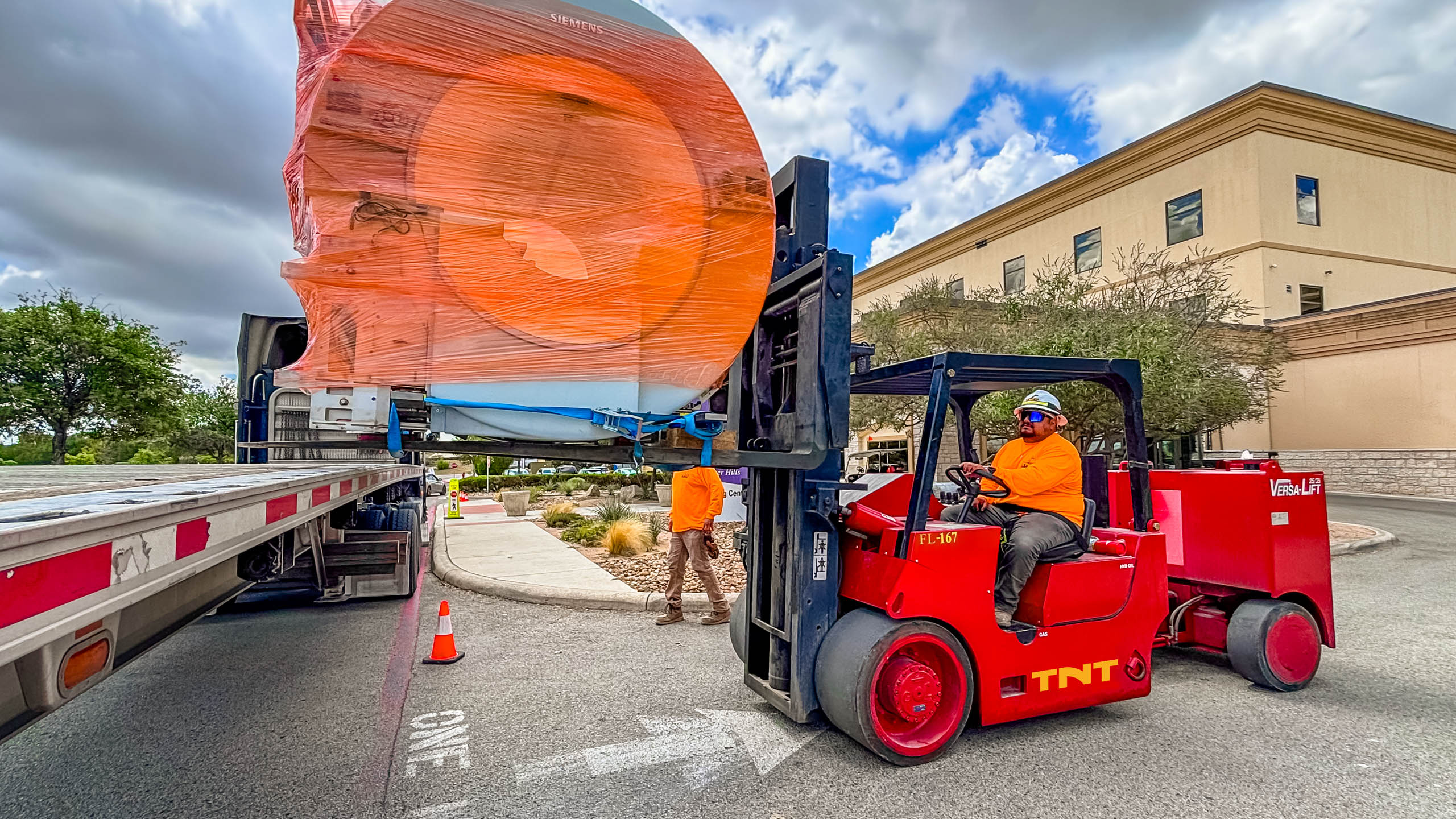
Our services can support one piece of equipment or the phased relocation of an entire production area.
Common applications include:
- + CNC machines, presses, lathes, mills, and machining centers
- + Transformers, switchgear, generators, motors, and turbines
- + Manufacturing lines, conveyors, and processing equipment
- + Boilers, chillers, HVAC components, and mechanical systems
- + Data center equipment and electrical infrastructure
- + Medical and laboratory equipment
- + Injection molding and packaging machinery
- + Tanks, vessels, skids, and prefabricated systems
- + Aerospace and automotive manufacturing equipment
- + Equipment removal for plant closures, upgrades, or auctions
Depending on the project, we can support disconnection coordination, lifting, internal transport, loading, heavy-haul transportation, unloading, placement, and alignment assistance.
Machinery Moving Equipment

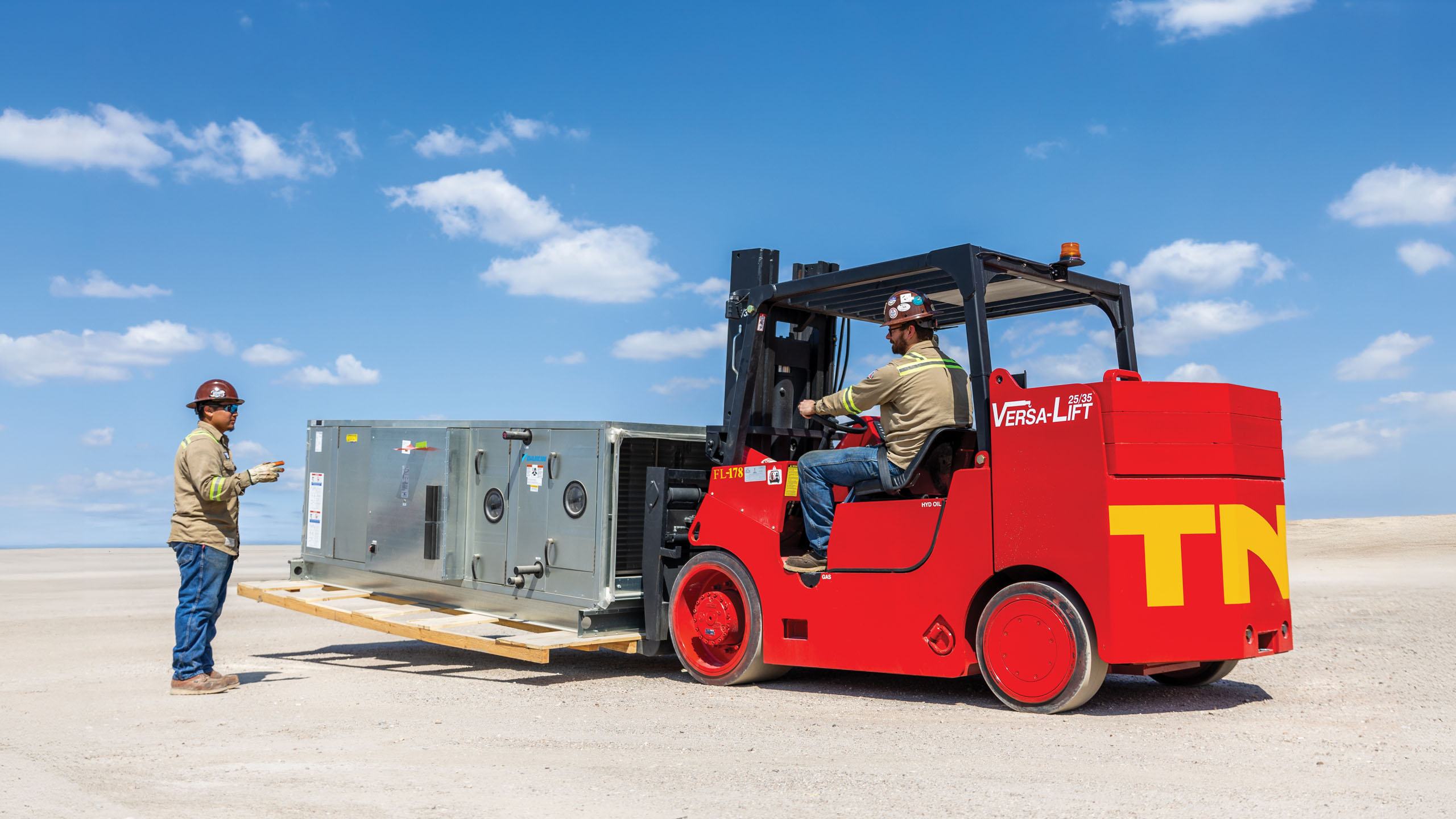
Specialized Forklifts
Our Versa-Lift forklifts, Hoist forklifts, and TriLifters provide capacities up to 75 tons. These compact machines are designed for industrial environments where maneuverability and controlled placement are important.


Standard Forklifts & Telehandlers
Our standard forklifts and telehandlers range from 2,500 to 17,000 pounds of capacity. Available equipment includes models from Manitou, Toyota, Clark, Hyster, and other established manufacturers. They are used for material handling, equipment support, palletized loads, attachments, and lighter machinery placement.

Hydraulic Gantry Lift Systems
Hydraulic gantry systems provide an effective alternative when traditional cranes cannot access the work area. With lifting capacities of up to 1,178 tons, our gantries are capable of lifting extremely heavy equipment while operating inside buildings, beneath existing structures, and in areas with limited overhead clearance.
Track systems can also be incorporated to move equipment horizontally after lifting, allowing large components to be relocated with exceptional control.

Sliding Systems
Sliding systems can move loads up to 500 tons along a controlled track. Their low profile makes them suitable for installing or removing machinery beneath structures and within restricted industrial spaces.
Hydraulic Jacks
Hydraulic cylinder jacks provide capacities up to 103 tons per unit. They can be synchronized to raise equipment evenly and may be paired with sliding systems or machinery skates.
Machinery Skates
Our machinery skates range from 6,000 to 100,000 pounds per skate and are available in rigid and multidirectional arrangements. The correct configuration is selected after evaluating the floor, route, load distribution, and turning requirements.

Cantilever Bars
We provide cantilever bars with 10 Ton, 30 Ton, and 50 Ton rated capacities. These bars extend beyond a crane’s main structure, offering additional reach, balance, and stability when lifting loads in constrained or obstructed areas. By redistributing weight, they help reduce stress on rigging components and improve overall lift control, making them an essential tool for complex lifting scenarios.

Benefits of Professional Machinery Moving
Professional planning helps protect valuable equipment, nearby structures, floors, utilities, and personnel. It also creates a defined sequence for shutdown, removal, transportation, installation, and restart.
Our integrated services can reduce handoffs between vendors because we can coordinate cranes, rigging, heavy haul, engineering, and temporary industrial storage. This is particularly valuable when equipment must be removed before its new foundation is ready or when several machines must arrive in a specific installation sequence.

Our Machinery Moving Process
1. Initial Consultation
Contact us with the machinery type, weight, dimensions, current location, destination, schedule, and available drawings. Tell us whether the move is within one facility or requires transportation to another site.
2. Site Survey
We review door dimensions, aisle widths, ceiling height, overhead utilities, floor conditions, loading areas, trailer access, foundations, and the final equipment orientation. The survey also helps identify whether partial disassembly or temporary removal of building components may be needed.
3. Move Planning
Our team develops the equipment plan, crew requirements, rigging arrangement, transportation sequence, and schedule. Engineering documents can be prepared for complex or high-consequence moves.
4. Equipment Preparation
Before movement begins, the machinery must be shut down, isolated, and disconnected from electrical, mechanical, gas, air, water, and process systems by the appropriate parties. Loose components are secured, and sensitive areas may be protected for transportation.
5. Lifting, Moving, & Transportation
Our crews lift and move the equipment using the selected rigging systems. When transportation is included, we coordinate loading, securement, route requirements, delivery, and unloading.
6. Placement & Completion
The machinery is lowered onto its foundation or designated area. Final leveling, alignment, anchoring, or utility reconnection can be coordinated according to the agreed scope. Machinery moving equipment is supplied with qualified operators and rigging personnel. It is not treated as a simple equipment-only rental for customer operation.
Equipment Library
Technical Specifications | Crane Capabilities | Load Charts
Why Choose TNT for Machinery Moving?
- + Experienced Team: Our skilled operators and rigging specialists ensure your equipment is moved safely and efficiently.
- + Specialized Equipment: We utilize industry-leading tools and machinery to handle even the most challenging relocations.
- + Safety First: Every machinery move follows strict safety protocols to protect personnel and equipment.
- + Minimized Downtime: Our efficient processes reduce operational disruptions, getting your machinery into place quickly.
TNT Crane & Rigging is your trusted partner for professional Machinery Moving Services. Contact us today to discuss your needs and learn how we can assist with your next project.
Frequently Asked Questions
How long does machinery relocation typically take?
Machinery relocation typically takes 2 to 10 days depending on equipment complexity, distance, and site conditions. Simple in-facility moves may be completed in 1 to 3 days, while complex relocations involving disassembly or long-distance transport can extend several weeks. At TNT Crane & Rigging, we develop detailed schedules during planning to ensure minimal disruption to your operations.
What floor load capacity is needed for machinery moving?
Industrial facilities typically require floor load capacities between 150 and 500 pounds per square foot for machinery moving operations. Manufacturing facilities with heavy machinery often need 300 to 500 pounds per square foot, while warehouses may function with 150 to 250 pounds per square foot. We conduct thorough site assessments before every project to evaluate floor capacity and ensure your facility can safely support equipment during and after installation.
When should you use a gantry system versus a crane?
Gantry systems are ideal when traditional cranes cannot access work areas due to confined spaces, low overhead clearance, or building restrictions. Hydraulic gantries lift from ground level in tight quarters and can operate in wind speeds up to four times higher than cranes. We evaluate your site conditions and equipment requirements to recommend the most efficient lifting solution for your project.
Do I need permits for moving equipment on-site?
On-site moves within private property generally do not require transportation permits, though you may need building permits or utility work authorizations depending on local jurisdiction. If equipment moves onto public roads, even briefly, you will need oversize or overweight load permits. TNT Crane & Rigging manages all permit requirements and regulatory compliance for your machinery moving projects.
How much downtime should I expect during relocation?
Most machinery relocations require complete equipment shutdown, with typical downtime ranging from 1 to 3 days for straightforward projects. Strategic planning can minimize production impact through phased relocations or scheduling moves during maintenance windows. We work closely with your operations team to develop schedules that reduce downtime and maintain production targets.
Can machinery be moved without disassembly?
Many machines can be moved intact when site conditions permit, though larger equipment often requires partial disassembly for safe transport through doorways or onto trailers. Our experienced rigging team evaluates each situation during pre-move site surveys, following manufacturer guidelines to determine whether intact moving or strategic disassembly provides the safest approach.
What insurance is required for machinery moving?
Professional machinery moving requires riggers liability insurance, which covers equipment during lifting and transport, with coverage limits typically matching equipment value. Standard general liability policies exclude this coverage. TNT Crane & Rigging carries comprehensive riggers liability, general liability, commercial auto, and workers compensation, providing complete protection throughout your project.
How do I prepare a facility for machinery installation?
Facility preparation includes verifying floor load capacity, ensuring electrical power and utilities meet machinery specifications, and confirming access routes provide sufficient clearance. Critical steps include clearing the installation area, reinforcing floors if needed, and coordinating utility shutdowns. We provide detailed preparation checklists during planning to prevent delays and ensure seamless installation.
Are machinery moving services available for small spaces?
Yes, TNT Crane & Rigging specializes in moving equipment through confined spaces using compact hydraulic gantries, specialized skate systems, and precision rigging techniques. We utilize narrow-profile lifts, modular systems, and remote-controlled movers to navigate challenging environments including narrow corridors and low-ceiling facilities. We conduct thorough site assessments to develop customized solutions for even the most restrictive spaces.