

Crawler Cranes
Request a Job Quote
Submit a Quote Form and a TNT Sales Representative will be in contact with you as soon as possible.
GET A QUOTECapacities up to 825 Tons
At TNT Crane & Rigging, we provide crawler crane rental services with lifting capacities up to 825 tons for industrial, infrastructure, petrochemical, and energy projects throughout the United States.
Crawler cranes are commonly selected for projects involving heavy components, extended lift radiuses, difficult terrain conditions, and long project durations where the crane will remain on site for an extended period.

Advantages of Crawler Cranes
Superior Stability
The wide tracked undercarriage creates excellent stability during heavy lifting operations. This allows crawler cranes to handle larger loads at greater heights and radiuses while maintaining lifting performance on demanding job sites.
Lower Ground Pressure
Crawler cranes distribute their weight more evenly across the ground surface than many wheeled cranes. This lower ground pressure allows them to work more effectively on soft soils, muddy conditions, sand, and undeveloped construction sites.
Ability to Move Around the Job Site
Unlike many conventional cranes that must be disassembled before relocation, crawler cranes can often travel short distances around the project site while fully assembled. Certain configurations can even move while carrying suspended loads when operating within approved manufacturer guidelines.
High Lifting Capacities
Crawler cranes are frequently used for some of the largest lifting operations in construction and industrial projects because they can support extremely high capacities with long boom systems and specialized lifting configurations.

Crawler Crane Configurations
Crawler cranes can be configured in several ways depending on project requirements, lifting radius, and site conditions.
Available configurations may include:
- + Main boom configurations
- + Fixed jib attachments
- + Luffing jib systems
- + Heavy lift attachments
- + Variable counterweight packages
- + Extended boom systems
- + Superlift configurations
- + Specialized rigging arrangements
Our team evaluates each project individually to determine the appropriate crane setup based on the lift plan and operating conditions.

Typical Applications for Crawler Cranes
Bridge Construction
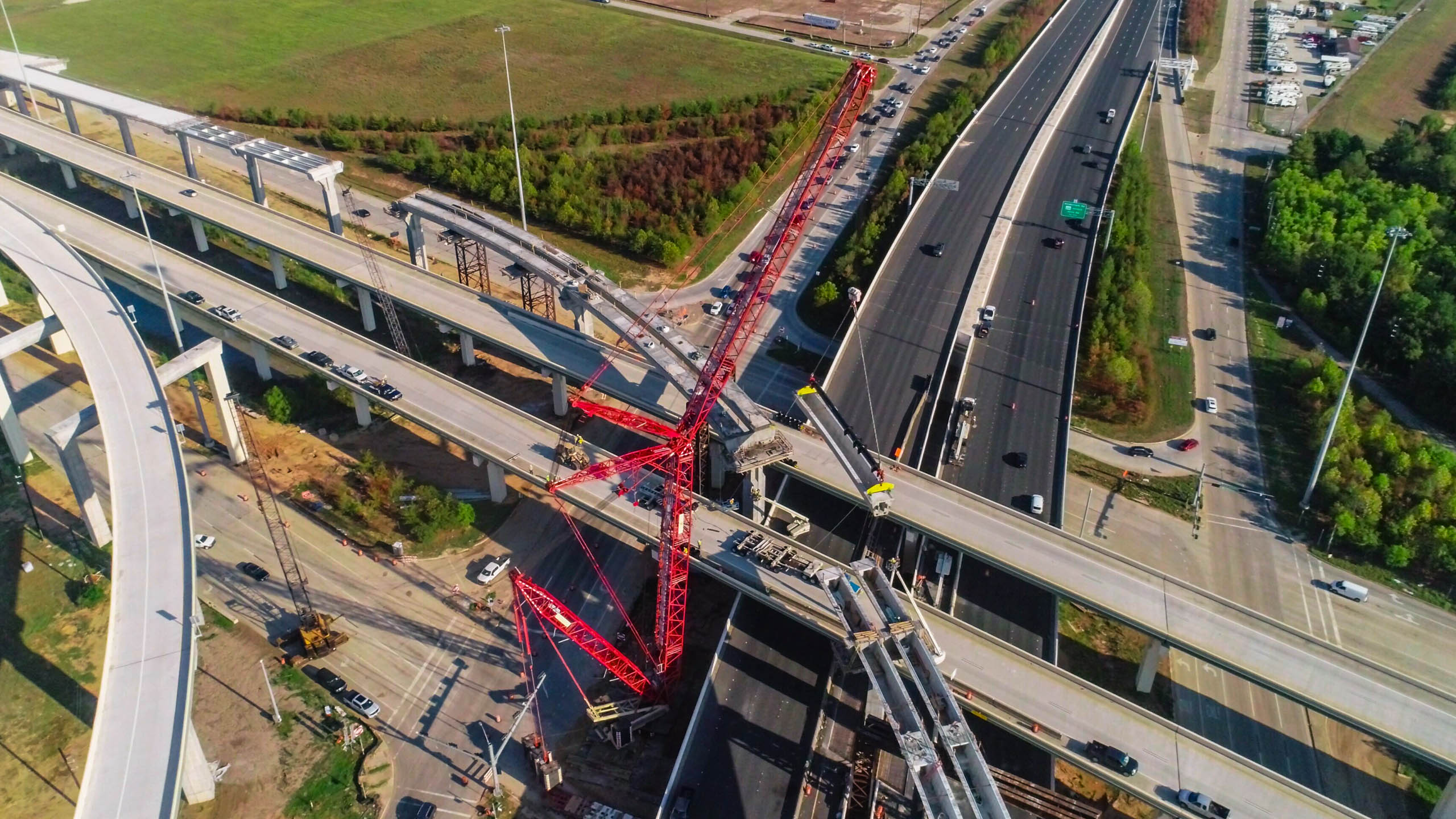
Crawler cranes are frequently used for bridge girder placement, precast concrete installation, and heavy structural assembly on transportation infrastructure projects.
Petrochemical & Refinery Projects
Large industrial facilities often require crawler cranes for vessel installation, reactor replacement, shutdown work, structural upgrades, and process equipment handling.
Power Generation Facilities
Power plants, substations, and energy infrastructure projects regularly rely on crawler cranes for turbine installation, heavy equipment setting, and large component assembly.
Wind Energy Projects
Crawler cranes support wind turbine construction and maintenance by handling tower sections, nacelles, blades, and other oversized components that require high-capacity lifting.
Marine & Port Construction
Port facilities, marine terminals, and waterfront construction sites often use crawler cranes because of their stability on challenging ground surfaces and their ability to handle heavy structural components.
Large Industrial Construction Projects
Manufacturing plants, steel mills, chemical facilities, and industrial expansions commonly require crawler cranes for structural steel erection, equipment installation, and heavy material handling.
Crawler Crane Capacities & Technical Specifications
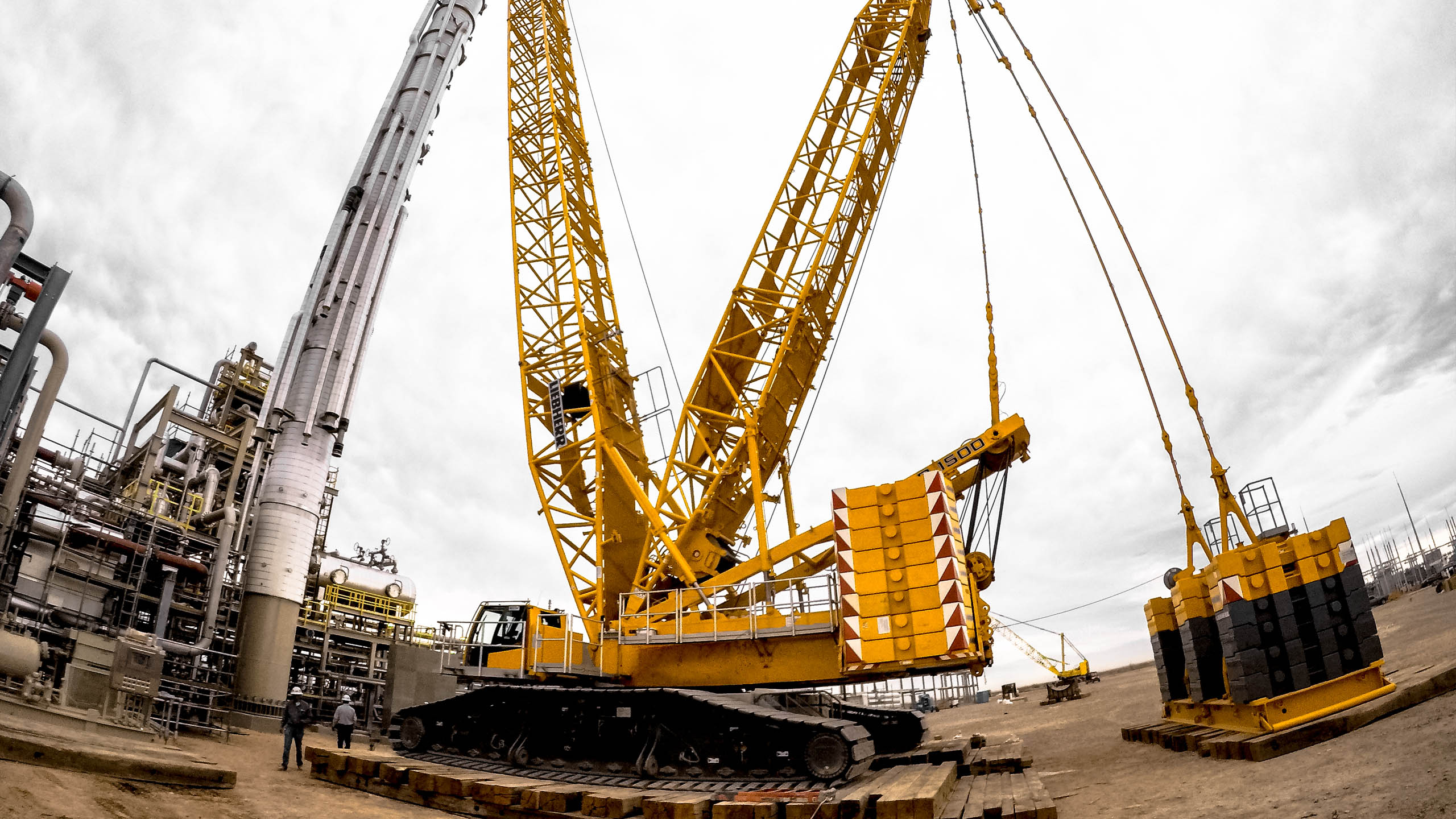
Our crawler crane fleet includes capacities ranging from 80 tons to 825 tons, allowing us to support a broad range of lifting applications.
Depending on the crane model and configuration, technical capabilities may include:
- + Lifting capacities up to 825 tons
- + Lattice boom systems
- + Long boom configurations
- + Heavy lift attachments
- + Luffing jib options
- + Variable counterweight systems
- + High-capacity winches
- + Advanced load monitoring systems
- + Engineered lift configurations
- + Multiple track width options
Actual crane capacity depends on several variables, including boom length, working radius, counterweight setup, lift height, and site conditions. Our team reviews project-specific lift requirements carefully before recommending crane configurations.
What to Expect During the Rental Process
Project Evaluation & Lift Planning
Crawler crane projects often involve detailed planning because of the crane size, transportation requirements, and site conditions involved.
Our planning process may include:
- + Load analysis
- + Crane selection
- + Lift radius calculations
- + Ground bearing evaluations
- + Transportation coordination
- + Assembly planning
- + Site access review
- + Rigging requirements
- + Safety procedures
This process helps identify the safest and most efficient lifting solution before mobilization begins.
Transportation & Mobilization
Crawler cranes are transported in multiple components that may include:
- + Main crane body
- + Crawler tracks
- + Boom sections
- + Counterweights
- + Jib components
- + Support equipment
Transportation requirements vary significantly depending on crane size and configuration. Larger crawler cranes may require multiple truckloads, oversize permits, escort vehicles, and detailed route planning.Our logistics team coordinates transportation planning to help maintain project schedules and reduce delays.
Assembly & Setup
Once the crane arrives on site, assembly crews complete crane erection procedures that may include track installation, boom assembly, counterweight placement, and operational testing.
Assembly timelines depend on crane size and configuration. Smaller crawler cranes may be operational within several hours, while large-capacity heavy lift crawler cranes can require multiple days for full assembly.
Onsite Operation
Once assembled, crawler cranes provide stable lifting performance for long-duration projects and can often reposition around the job site without requiring complete disassembly.
This operational flexibility is one of the primary reasons crawler cranes are widely used on major industrial and infrastructure projects.
Ground Preparation & Site Conditions
Although crawler cranes distribute weight effectively, proper ground preparation remains essential for safe lifting operations.
Ground preparation may include:
- + Crane mat installation
- + Soil stabilization
- + Compaction work
- + Ground bearing pressure analysis
- + Drainage improvements
- + Access road preparation
Our team evaluates soil conditions, anticipated loads, and crane configurations to determine what level of site preparation may be required before crane operations begin.
Safety & Maintenance Standards
Safe crawler crane operation depends on detailed planning, proper assembly procedures, regular inspections, and experienced personnel.
Our crawler crane fleet is maintained according to manufacturer recommendations and applicable industry standards. Inspection procedures are completed before deployment, and lift operations are coordinated according to project-specific safety requirements.
Safety planning may include:
- + Engineered lift plans
- + Ground bearing calculations
- + Crane mat analysis
- + Wind monitoring
- + Rigging inspections
- + Assembly supervision
- + Communication procedures
- + Site hazard assessments
Browse Crane Library
Technical Specifications | Crane Capabilities | Load Charts
Frequently Asked Questions
What is the maximum lifting capacity for crawler cranes?
TNT Crane & Rigging offers crawler cranes with lifting capacities ranging from 80 tons to 750 tons, providing solutions for heavy-duty lifting operations across diverse project requirements. Our crawler crane fleet includes various configurations with lattice boom systems that can be customized to match your specific lifting needs, whether you’re installing bridge components, handling industrial equipment, or managing large-scale infrastructure projects. The maximum capacity you’ll need depends on your load weight, required reach, and site conditions, which our experienced team can help determine during the planning phase.
How long does crawler crane assembly and setup take?
Crawler crane assembly typically takes between 4 to 8 hours for smaller models and 1 to 3 days for larger lattice boom crawler cranes, depending on the crane size, boom configuration, and site conditions. Assembly time includes positioning the crawler tracks, installing boom sections, adding counterweights, and completing all safety checks before operation begins. TNT Crane & Rigging’s experienced crews follow OSHA-compliant assembly procedures to ensure safe and efficient setup, and some modern crawler cranes feature self-assembly capabilities that can reduce setup time to under one hour for the basic machine.
Do crawler cranes require special ground preparation?
Yes, crawler cranes typically require crane mats or ground preparation to ensure adequate ground bearing capacity and prevent settlement during lifting operations. While crawler cranes exert significantly lower ground pressure than wheeled cranes, typically ranging from 1.0 to 3.0 pounds per square inch due to their tracked undercarriage, proper ground preparation remains essential for safety and stability. TNT Crane & Rigging’s lift planning team conducts thorough site assessments to determine if timber mats, steel mats, or ground improvement measures are needed based on soil conditions, crane configuration, and anticipated loads.
When should I choose a crawler crane over a mobile crane?
You should choose a crawler crane over a mobile crane when your project involves heavy lifting on soft or uneven terrain, requires extended on-site operation in one location, or demands exceptional stability for large-scale lifts. Crawler cranes excel in applications where superior ground bearing capacity and the ability to move with a load are critical advantages, such as bridge construction, industrial plant installations, and infrastructure projects on challenging surfaces. TNT Crane & Rigging recommends crawler cranes for long-term projects where initial setup time is offset by their unmatched lifting capacity and stability, while mobile cranes better suit projects requiring frequent relocation and rapid deployment.
How are crawler cranes transported to the job site?
Crawler cranes are transported to job sites by disassembling them into major components, including the main body, boom sections, counterweights, and crawler tracks, which are then loaded onto multiple lowboy or multi-axle trailers for highway transport. A typical 100-ton crawler crane requires approximately 4 trailer loads, while larger models like an 1,300-ton capacity crawler may need 17 or more loads depending on configuration. TNT Crane & Rigging manages all aspects of crawler crane transportation, including securing necessary oversize and overweight permits, coordinating escort vehicles, conducting route surveys, and arranging for qualified crews to reassemble the crane at your project site.
What ground bearing capacity does a crawler crane need?
The required ground bearing capacity for crawler cranes varies significantly based on crane size, configuration, and lifting conditions, but typically ranges from 1,000 to 4,000 pounds per square foot for most soil types when proper crane mats are used. Crawler cranes distribute their weight more effectively than wheeled cranes due to their tracked undercarriage, exerting ground pressure between 1.0 and 3.0 pounds per square inch under normal conditions. TNT Crane & Rigging’s engineering team calculates specific ground bearing requirements for each lift by considering the crane’s operating weight, load characteristics, boom configuration, and soil conditions, then specifies appropriate crane mats or ground improvement methods to ensure safe operations.
Can crawler cranes operate in muddy or soft terrain?
Yes, crawler cranes are specifically designed to operate effectively in muddy or soft terrain conditions where wheeled cranes would be impractical or unsafe, thanks to their tracked undercarriage that distributes weight over a larger surface area. The wide track base provides superior flotation on soft ground, including mud, sand, and saturated soils, making crawler cranes the preferred choice for construction sites with challenging ground conditions. TNT Crane & Rigging enhances crawler crane performance in soft terrain by utilizing appropriate crane mats, conducting geotechnical assessments when necessary, and selecting crane configurations that optimize ground bearing pressure for your specific site conditions.